
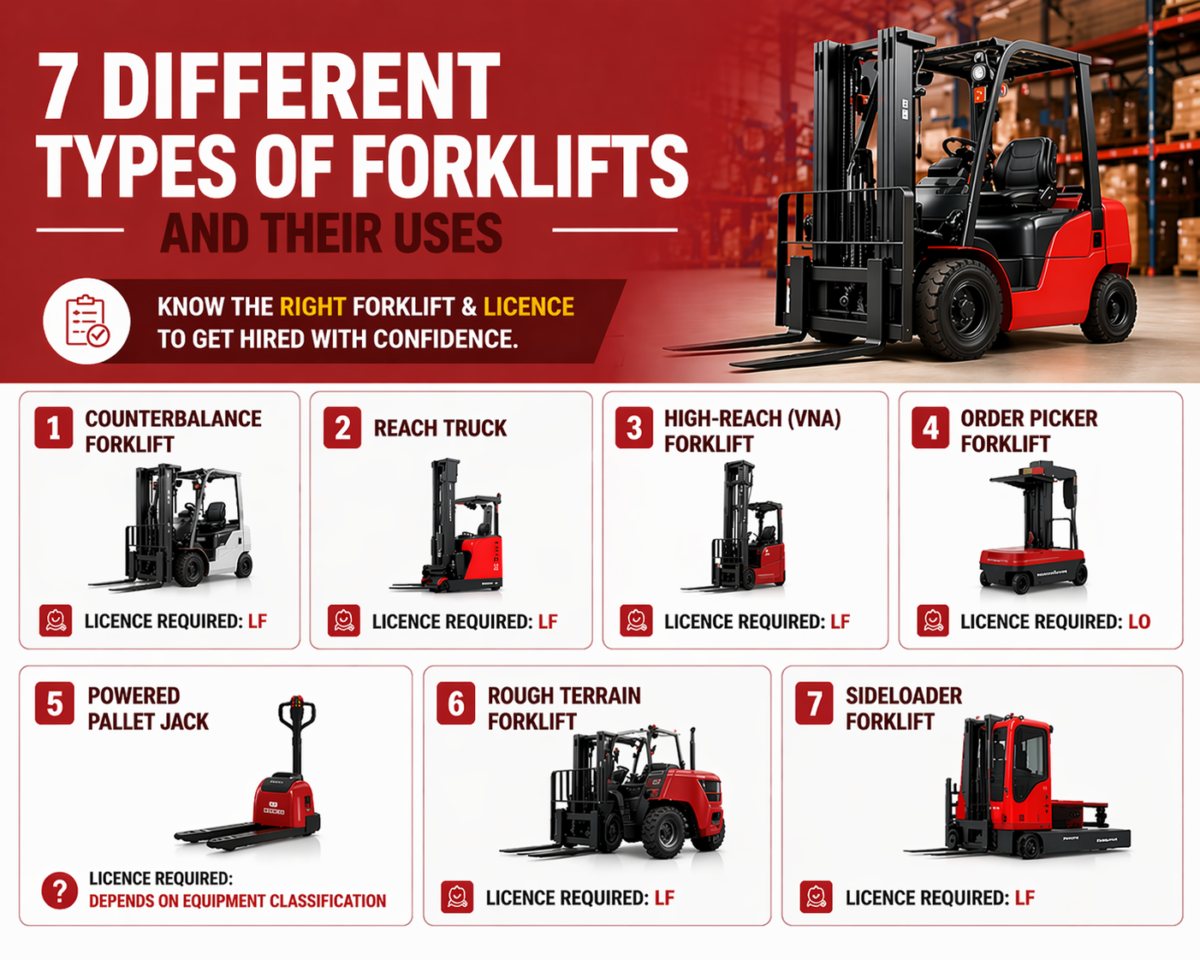
Do you need a different forklift licence for every type of forklift you operate?
It is one of the most frequently asked questions by workers entering warehousing and logistics across Australia, and the answer is not as straightforward as most expect.
According to Jobs and Skills Australia, 71,300 forklift operators are working across Australia. With their demand rising fast in Melbourne’s growing logistics hubs in Derrimut, Laverton, Truganina, Tullamarine (Melbourne Airport Area) and Dandenong South, employers expect workers to be job-ready with the right forklift licence from day one.
Double-check your forklift licence before reporting to the warehouse, so nothing stands in your way when you start. Knowing the 7 different types of forklifts, their real-world uses, and which licence each one requires puts you ahead before you even apply to a specific forklift job (ANZSCO Classification – Forklift Drivers 7213) in Victoria.
This guide covers everything you need to know about Forklift licenses.
What Forklift Licences Exist in Australia?
In Australia, forklift licences are issued under the High Risk Work Licence (HRWL) framework, regulated by each state’s workplace safety authority, including WorkSafe Victoria, for workers across Melbourne and regional Victoria.
There are two main licence classes used across warehouses and industrial settings:
LF Licence – Licence to Operate a Forklift Truck
The LF is the standard forklift licence Australian workers hold. It covers the operation of most forklift types used across warehouses, logistics operations, construction sites, and manufacturing facilities. If you are entering the industry for the first time, an LF licence is almost always your starting point.
LO Licence – Licence to Operate an Order Picking Forklift Truck
The LO licence covers order-picking forklifts, specifically machines in which the operator is elevated with the load. It does not cover standard forklift trucks, and an LF licence does not cover order pickers. This is the most common source of confusion for new starters.
Both licences are nationally recognised across all Australian states and territories, meaning once you are qualified, you can work anywhere in the country.
7 Common Types of Forklifts Used in Australian Warehouses
1. Counterbalance Forklift
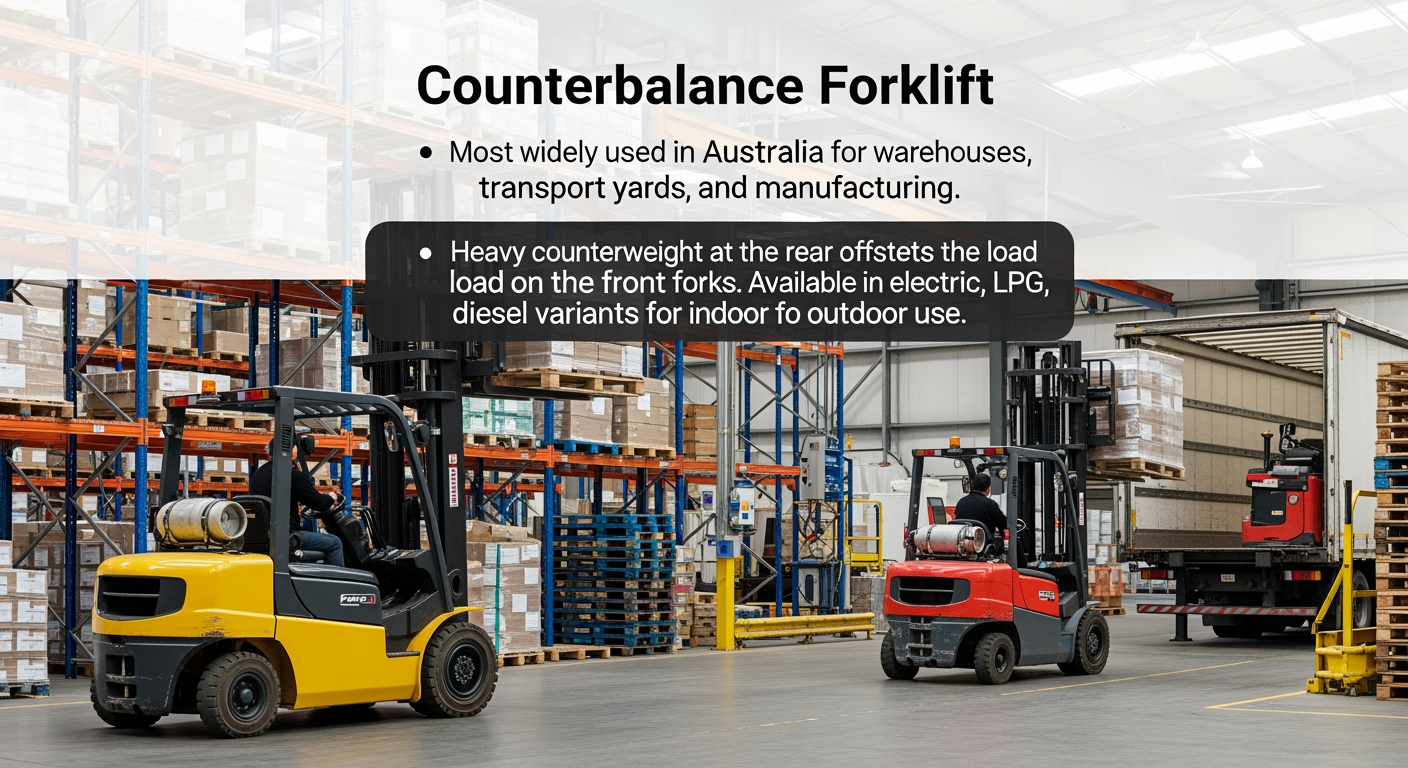
The counterbalance forklift is the most widely used forklift type across Australia. You will find them in general warehouses, transport yards, manufacturing facilities, and loading docks right across Melbourne’s industrial suburbs.
These machines carry a heavy counterweight at the rear to offset the load on the front forks. They come in electric, LPG, and diesel variants, making them adaptable to both indoor and outdoor environments.
Common uses:
- Loading and unloading trucks at loading docks
- Moving pallets across open warehouse floors
- Stacking goods into standard racking systems
2. Reach Truck
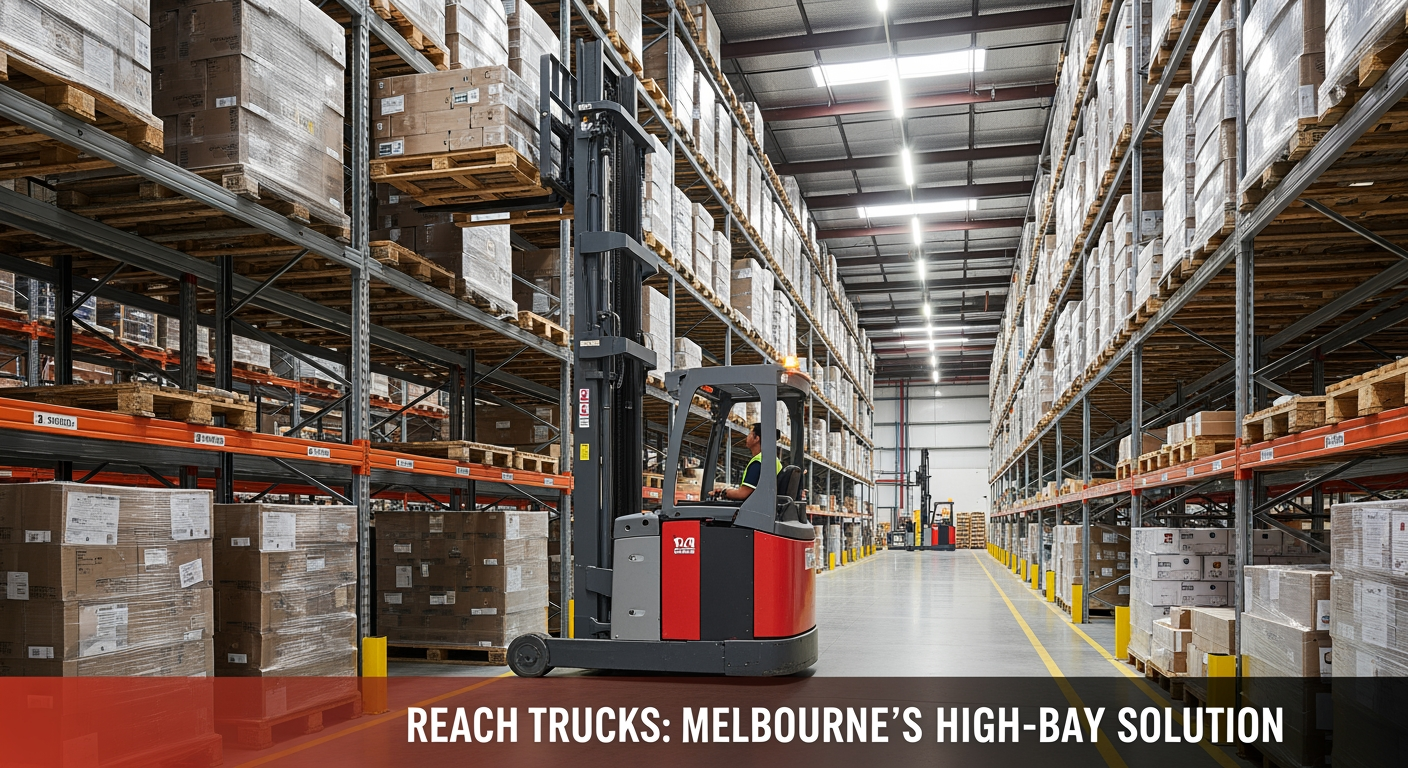
Reach trucks are built for narrow-aisle, high-bay warehousing. The forks extend forward from the mast to reach into the racking, allowing operators to store and retrieve pallets at significant heights without driving the full machine into the aisle.
These are a fixture across Melbourne’s large distribution and cold storage facilities, where maximising vertical space is a daily operational need.
Common uses:
- High-level pallet storage and retrieval
- Narrow-aisle warehouse operations
- Stacking to heights of 10 metres or more
3. High-reach (Reach truck or VNA) Forklift
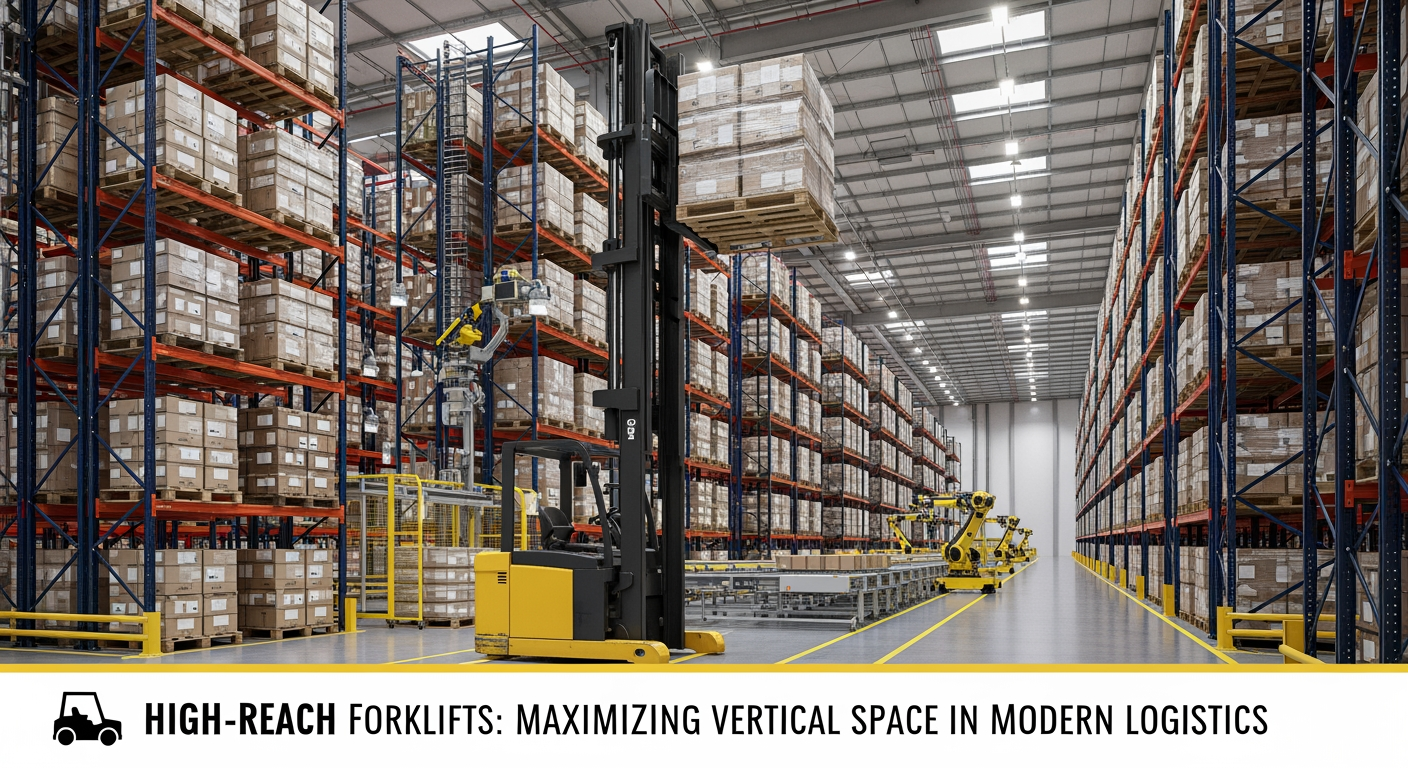
The high-reach forklift extends the reach truck concept further, with mast systems capable of lifting loads to heights exceeding 12 metres in purpose-built high-bay facilities. These machines are common in large-scale logistics hubs and automated storage environments where every metre of vertical space matters.
Common uses:
- Very high-bay racking systems
- Large distribution and fulfilment centres
- Automated and semi-automated warehouse operations
4. Order Picker Forklift
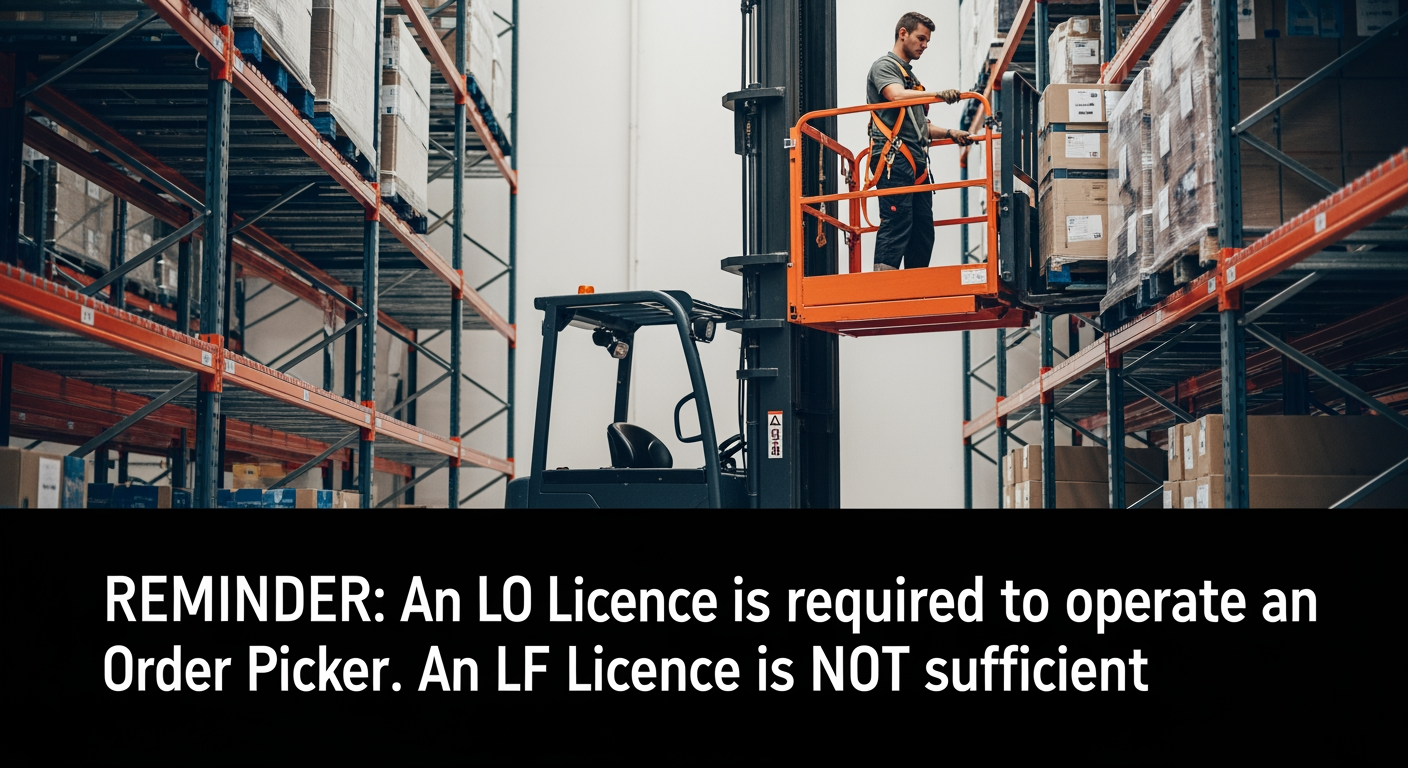
The order picker is the only forklift type on this list that requires a different licence class, and this is where many workers get caught out.
Unlike most forklifts, where only the forks move, the entire operator platform elevates with the load. This allows workers to pick individual items directly from shelving at height. Because the operator is working at an elevated height, the safety requirements are fundamentally different, including the use of a harness in most applications. Safety systems such as harnesses or fall protection may be required depending on workplace policies and risk assessments.
Operating an order picker with an LF licence alone is not compliant. You need a separate LO licence.
Common uses:
- Picking individual items from high shelving
- E-commerce fulfilment and retail distribution
- Supermarket supply chain warehouses
5. Powered Pallet Jack
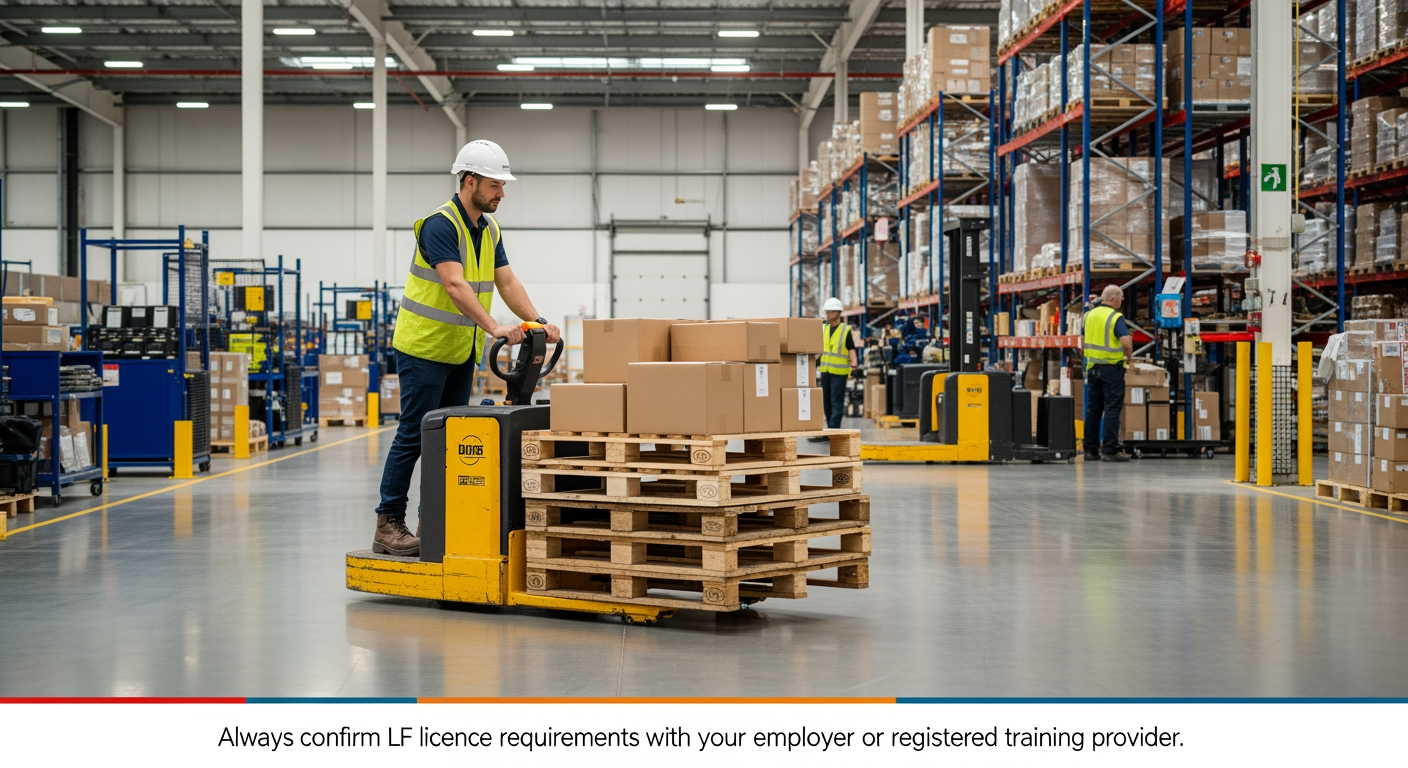
A powered pallet jack, also called a ride-on pallet mover or electric pallet truck, is used to move pallets horizontally across flat warehouse floors. Unlike stackers and reach trucks, they are not designed for lifting loads to height.
It is important to note that not all powered pallet jacks fall under the High Risk Work Licence requirement. Licence requirements depend on the specific design and capacity of the machine. Most powered pallet jacks do not require a High Risk Work Licence. However, ride-on or forklift-like pallet equipment may require an LF licence depending on lift height and design.
If your workplace uses powered pallet equipment, always confirm with your employer or a registered training provider whether an LF licence applies to that specific machine.
Common uses:
- Transporting pallets across docks and warehouse floors
- Food distribution and cold storage logistics
- High-volume, fast-moving goods environments
6. Rough Terrain Forklift
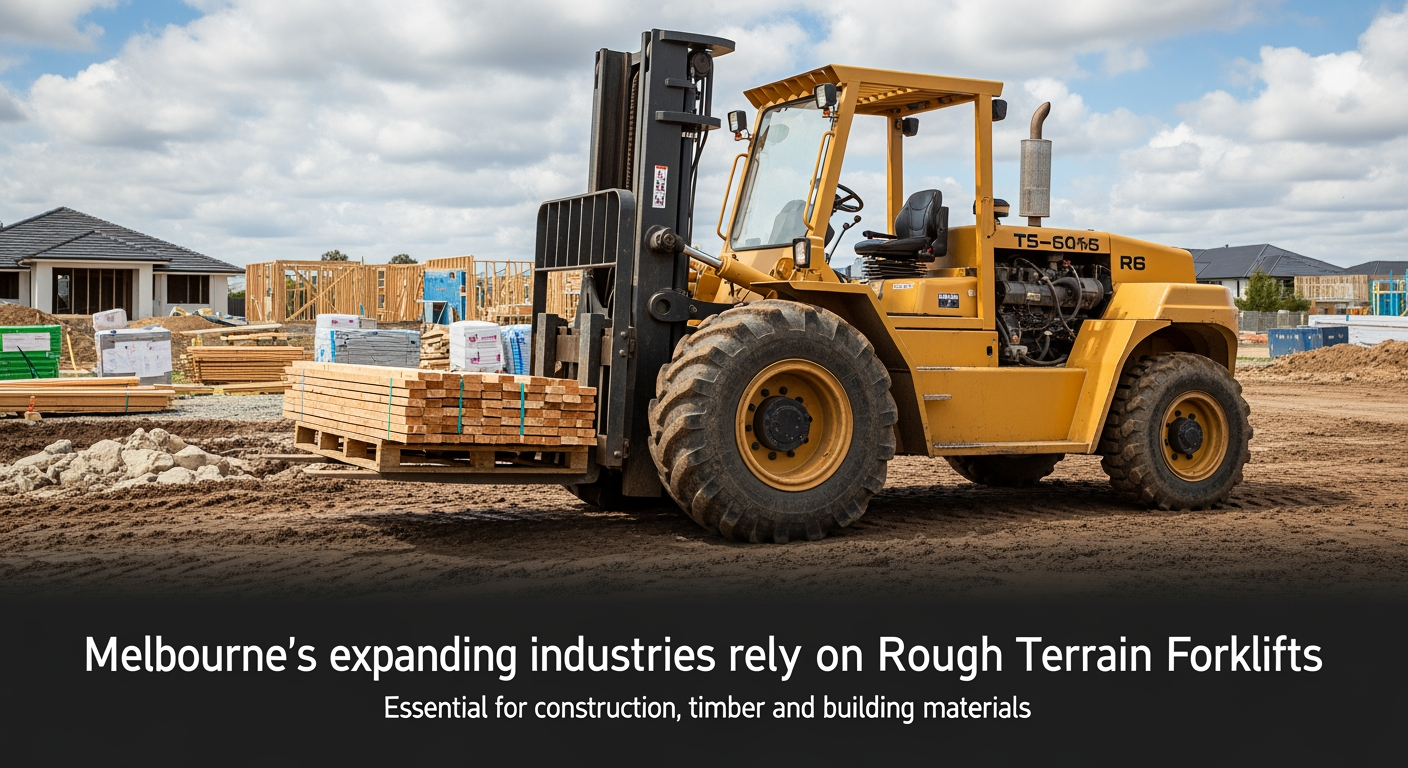
Built for outdoor and uneven ground, rough terrain forklifts feature large pneumatic tyres, higher ground clearance, and powerful engines suited to conditions that would stop a standard warehouse forklift in its tracks.
These machines are essential across Melbourne’s outer suburban construction sites, timber yards, and the building materials sector for industries that continue to grow as the city expands.
Common uses:
- Construction and civil infrastructure sites
- Timber, building materials, and landscaping yards
- Agricultural and rural operations
7. Side Loader
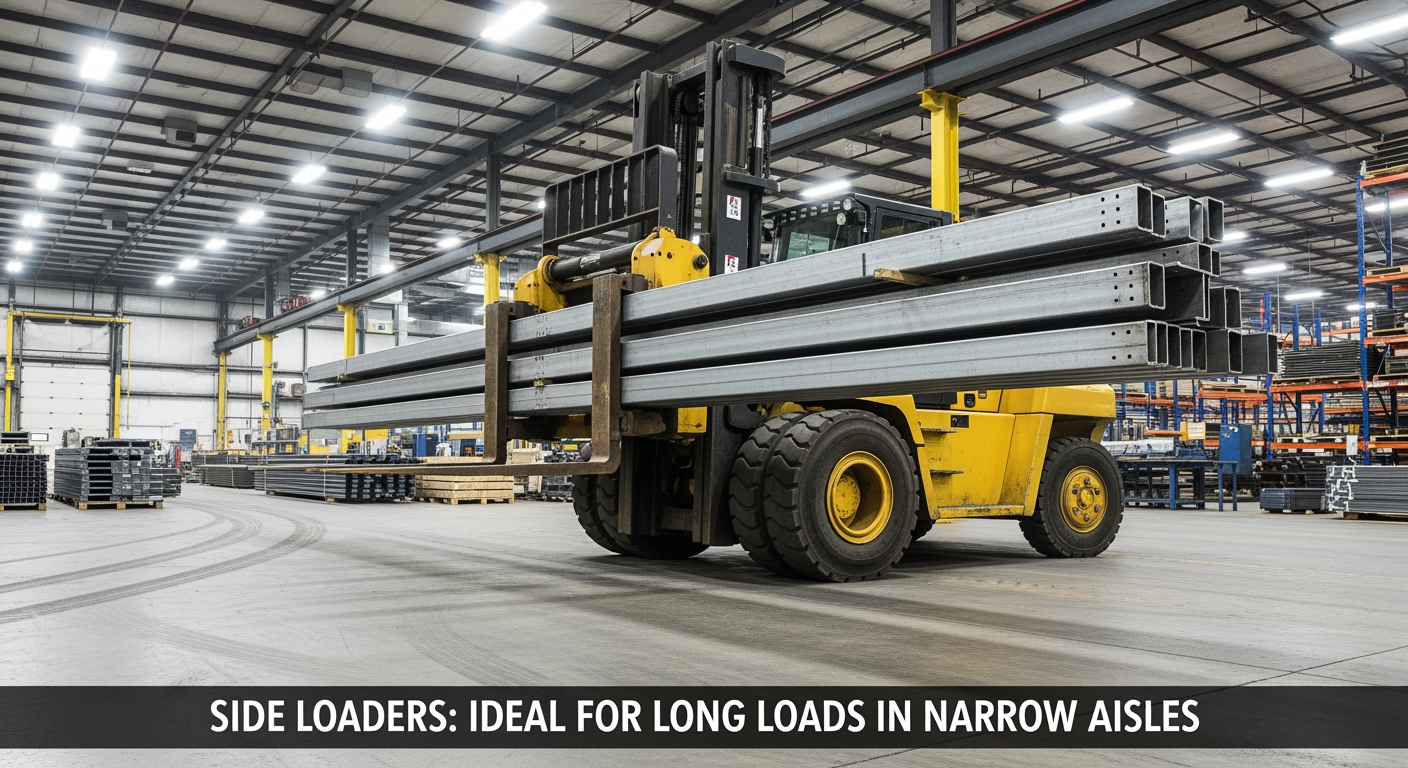
A side loader carries its forks on the side of the machine rather than the front. This design makes it highly efficient for handling long, awkward loads, such as timber lengths, steel sections, pipes, and panels that cannot be safely carried by a standard counterbalance forklift.
Side loaders are also effective in narrow aisles where turning a front-loading machine is not practical, making them a common sight in steel fabrication, timber, and heavy manufacturing industries.
Common uses:
- Handling long loads, including timber, steel, and pipes
- Narrow-aisle warehousing
- Steel fabrication and manufacturing facilities
LF vs LO: How to Choose the Right Licence
Choosing the right forklift licence in Australia comes down to what equipment is actually used in your workplace.
- Operating a counterbalance, reach truck, high reach, rough terrain forklift, or side loader?
- You need an LF licence.
- Operating an order-picking forklift where you are elevated with the load?
- You need an LO licence.
- Working in a mixed environment that uses both machine types?
- You may need both an LF and an LO.
The most common and costly mistake new starters make is assuming one licence covers all types of forklifts. It does not. Operating with the wrong licence class is a serious WHS breach and puts your safety at risk, and may result in regulatory penalties under workplace safety laws. It exposes your employer to significant liability and can cost you the job before you have even started.
Always confirm which machines your employer uses before you enrol in training.
Why Training Matters for Getting Hired Faster
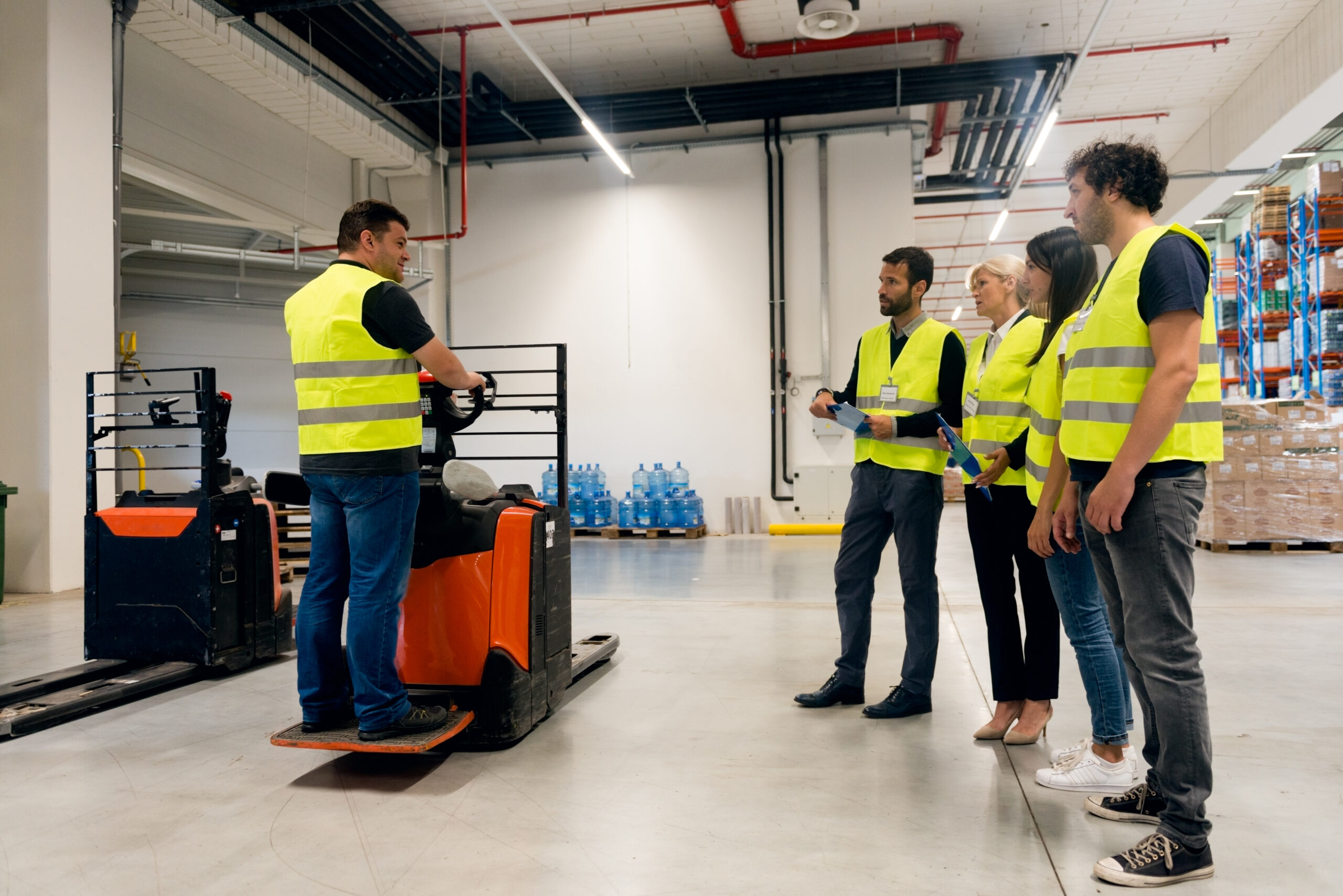
Many employers across Melbourne now prefer candidates who already hold the correct forklift licence in Australia and understand the different types of forklifts and uses in a real warehouse setting.
Many employers in Victoria also require a site-specific Verification of Competency (VOC) before operating forklifts, even if you already hold an LF or LO licence.
Training at Star Training and Assessing is based on actual workplace situations. Rather than just completing an assessment, Students gain practical confidence and safety knowledge that is in high demand across Melbourne’s logistics, construction and manufacturing sectors.
With training campuses located in Laverton North, Rowville and Pakenham, Star Training is well-positioned to service workers and employers in the industrial corridors of Melbourne’s west, east and south-eastern suburbs. The companies have nationally recognised qualifications delivered by industry-experienced trainers, all in accordance with Registered Training Organisation (RTO #21830) since 2006.
Explore the Forklift Licence LF course or the Order Picker LO course and take the first step toward becoming job-ready.